
DBT-C (Live) For First-Time Participants
DBT-C (Live) For First-Time Participants
Part 1: October (17,18,19,24,25,26) 2026
Part 2: February (13,14,15,20,21,22) 2027
Register
Description
The Dialectical Behavior Therapy for Children (DBT-C) model and training developed by Francheska Perepletchikova, Ph.D. for pre-adolescents, is an adaptation to Dr. Marsha Linehan’s standard DBT model. DBT-C provides clinicians with specific tools for the child’s caregivers, the child, and the adults in the child’s extended environment to address the child’s severe emotional dysregulation, behavioral dyscontrol and associated dysphoric mood, anxiety, substance and alcohol abuse, personality disorders, suicidality and non-suicidal self-injury, etc.
The workshop includes:
- Live remote lectures delivered in modular format by Dr. Perepletchikova and DBT-C co-trainers
- Knowledge tests that meet CE accreditation guidelines (80% pass rate with unlimited attempts)
- Live consultations to hone the acquired knowledge and skills: Three months of consultations after Part 1 + three months of consultations after Part 2
- Library of recorded role plays and debriefs on using the DBT-C strategies
- Library of recorded answers to clinicians’ questions during the DBT-C training
- Library of recorded answers to parent/caregiver questions during the parental component of the DBT-C training (Superparenting)
- Accreditation: 48 CE credits
Tuition
First-time participants: $2550
(10% discount for groups of 3 or more – please contact us directly for group registration)
Note: To register, first-time participants must submit a short application including clinical license information and uploading the completion certificate of either a standard DBT Intensive or Foundational training OR from The Comprehensive Training Center’s DBT Basics course. (See application form below under Register.)
For those with prior DBT-C training who wish to audit the live workshop: $750
In order to register at this tuition level, please use the application form on the DBT-C (Live) Audit page to submit documentation of prior DBT-C training. We appreciate your initial investment in learning DBT-C and would love to see you again in realtime for a refresher! Please note the audit option does not include consultations.
General Information
Chronic irritability and difficulty with self-control may negatively affect children’s emotional, social, and cognitive development and are predictive of personality disorders, dysphoric mood, substance and alcohol abuse, suicidality and non- suicidal self-injury in adolescence and adulthood. DBT-C provides clinicians with specific tools for the child’s caregivers, the child, and the child’s extended environment to address severe emotional dysregulation and associated behavioral dyscontrol related to the above concerns. Dialectical Behavior Therapy for pre-adolescent children (DBT-C) aims to facilitate adaptive responding by teaching coping skills and encouraging caregivers to create a validating and change-ready environment. In a randomized control trial of 7 – 12-year-old children with Disruptive Mood Dysregulation Disorder, those who received DBT-C had higher treatment attendance and significant reductions in the problems being studied.
This training is intended for clinicians invested in learning DBT-C to a high standard to better implement the treatment in their setting. It includes content on child individual counseling, didactics on emotions, parent training, and DBT-C skills. The training format includes lectures, role-play demonstrations, clinician and parent Q&As, homework assignments, Knowledge Check quizzes, and six months of consultation – three months after Part 1 and three months after Part 2. It includes a total of 48 training hours. Clinicians who are members of established DBT consultation teams may apply individually.
Prerequisites
All participants must have completed either standard DBT Intensive or Foundational training OR The Comprehensive Training Center’s DBT Basics course, and be a licensed clinician. Registration is preceded by submitting the application form below, documenting prior training. (As a prior DBT-C participant wishing to audit this live workshop, please register on this page.)
Resources for a deeper dive on DBT-C
| Research on DBT-C (Dr. Perepletchikova’s website) |  |
| DBT-C You Tube channel |  |
| Excerpts from the Role Play Library | ||
| Examples from the clinician/caregiver Q&A Library |
Additional background specifically on Core Problem Analysis (CPA)
| Article | Interview | |
|---|---|---|
| Introduction to CPA |  |  |
| Sense of Self-Love |  |  |
| Sense of Safety |  | 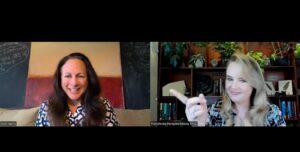 |
| Sense of Belonging |  |  |
The origin story of CPA (clips from an interview with Francheska)
| “Every dysfunction has a function.” CPA identifies the unconscious functions behind a behavior. | |
| How CPA bubbled up through years of functional analysis with clients, and using it as a guide to heal relationship with Self – for anyone – in therapy or not. |
Learning Objectives
Part 1 – Learning Objectives
As a result of this training, participants will be able to:
- Describe who might benefit from DBT-C.
- Explain evidence for model to clients & stakeholders.
- Describe how DBT-C was developed from standard DBT.
- Describe the biosocial model for severe emotion dysregulation and corresponding behavioral dyscontrol in preadolescent children.
- List the treatment hierarchy of DBT-C.
- Organize DBT-C to meet the required functions of treatment.
- Teach parents to understand the dialectical dilemmas of parenting.
- Teach parents the Behavior Change Model and create a change-ready environment.
- Teach parents specific behavior modification techniques.
- Teach parents to implement behavior management plans.
- Teach parents to create a validating environment.
- Teach parents how to overcome their difficulties with implementing techniques.
- Teach parents and children to engage in problem solving.
- Teach parents and children how to do cognitive restructuring.
- Conduct behavioral analysis with children.
- Teach parents and children to understand emotion.
- Describe the DBT-C Emotion Change Model.
- Teach DBT-C skills training.
- Design the DBT-C program to fit your setting.
Part 2 – Learning Objectives
- Formulate a DBT-C case conceptualization.
- Describe DBT-C secondary targets.
- Describe the three core senses.
- Describe Core Problem Analysis (CPA).
- Describe how CPA differs from other therapeutic models.
- Describe the main functions of CPA.
- Describe the CPA Emotion Model.
- Describe the 10 Principles of conducting CPA.
- Help parents understand factors that increase vulnerabilities in core senses.
- Describe interventions to decrease vulnerabilities to the sense of self-love.
- Describe interventions to decrease vulnerabilities to the sense of safety.
- Describe interventions to decrease vulnerabilities to the sense of belonging.
- Teach parents to implement techniques to decrease their own vulnerabilities in core senses.
- Teach parents to implement techniques to decrease vulnerabilities in core senses in their children.
- Describe adaptive and maladaptive CPA profiles.
Training Schedule
| Time (Based on New York time zone) | Segment | Description |
|---|---|---|
| Part 1: External Controlling Factors | ||
| Saturday, October 17, 2026 | ||
| 08:30 AM – 09:00 AM | Log-in and Test Set-Up | |
| 09:00 AM – 10:15 AM | Introduction to the Model: Current Evidence and Limitations | This section focuses on the empirical evidence collected thus far on the feasibility and efficacy of the DBT-C comprehensive model, as well as associated research on DBT-C treatment components and DMDD. |
| 10:15 AM – 10:30 AM | Break | |
| 10:30 AM – 11:45 PM | Biosocial Model | This section discusses the target population for DBT-C and highlights factors that may lead to emotional dysregulation in children, as well as how an invalidating environment develops. |
| 11:45 AM – 12:00 PM | Break | |
| 12:00 PM – 1:30PM | Parent Training Component: Treatment Target Hierarchy, Q&A | This section details the ten treatment targets of DBT-C, within a hierarchy of priorities. |
| Sunday, October 18, 2026 | ||
| 08:30 AM – 09:00 AM | Log-in and Test Set-Up | |
| 09:00 AM – 10:15 AM | Orientation to treatment for parents | This section outlines the assessment of parental readiness to engage in DBT-C, as well as pre-treatment orientation to the treatment structure and commitment of parents. |
| 10:15 AM – 10:30 AM | Break | |
| 10:30 AM – 11:45 PM | Creating a change-ready environment | This section focuses on how to train parents in the DBT-C Behavior Change Model. |
| 11:45 AM – 12:00 PM | Break | |
| 12:00 PM – 1:30PM | Behavioral capability | This section details how to facilitate the child’s use of adaptive coping strategies in real situations, and how to promote rehearsal of techniques in pretend mode to increase frequency of the reinforced practice. |
| Monday, October 19, 2026 | ||
| 08:30 AM – 09:00 AM | Log-in and Test Set-Up | |
| 09:00 AM – 10:15 AM | Factors that interfere with effective parenting | This section discusses factors that interfere with effective parenting and barriers to parental engagement in treatment. |
| 10:15 AM – 10:30 AM | Break | |
| 10:30 AM – 11:45 PM | Introduction to DBT-C secondary targets | This section introduces Core Problem Analysis, an assessment and intervention model that targets internal controlling factors (the relationship with self) and helps reduce vulnerabilities in the three core senses of self-love, safety and belonging. |
| 11:45 AM – 12:00 PM | Break | |
| 12:00 PM – 1:30PM | Creating a validating environment | This section contrasts validating vs. invalidating environments, defines validation, discusses functions and types of validations and provides validation-to-change formulas. |
| Saturday, October 24, 2026 | ||
| 08:30 AM – 09:00 AM | Log-in and Test Set-Up | |
| 09:00 AM – 10:15 AM | Introduction to behavior modification techniques, reinforcement and shaping | This section introduces essential behavior modification techniques, details factors that influence responses, and outlines the consequences that increase the probability of a behavior occurrence in the long-term. |
| 10:15 AM – 10:30 AM | Break | |
| 10:30 AM – 11:45 PM | Ignoring and Punishment | This section discusses behavior modification techniques that decrease the probability of a behavior occurrence in the long-term, and introduces techniques that suppress unsafe behaviors in the short-term. |
| Post Part 1 Three-month Consultation Period | 1 hour of consultation per month for 3 months (RSVP within the Learning Management System) | |
| Part 2: Internal Controlling Factors | ||
| Saturday, February 13, 2026 | ||
| 08:30 AM – 09:00 AM | Log-in and Test Set-Up | |
| 09:00 AM – 10:15 AM | Introduction to Core Problem Analysis (CPA) | This section introduces the main goals of the Core Problem Analysis, outlines internal controlling factors and details the three core senses of self-love, safety and belonging that are targeted by CPA. |
| 10:15 AM – 10:30 AM | Break | |
| 10:30 AM – 11:45 PM | How CPA differs from other therapeutic models | This section discusses similiarities and differences between CPA and several other therapeutic models, including DBT standard model, CBT, functional analysis, psychoanalysis, and schema therapy. |
| 11:45 AM – 12:00 PM | Break | |
| 12:00 PM – 1:30PM | Main functions of CPA: Validation, assessment,of meaning and function. Q&A | This section discusses how CPA promotes acceptance, validation and self-validation, helps clients understand meanings they ascribed to events and provides assessment of the functions of their responses. |
| Sunday, February 14, 2026 | ||
| 08:30 AM – 09:00 AM | Log-in and Test Set-Up | |
| 09:00 AM – 10:15 AM | Main functions of CPA: Cognitive restructuring and behavior change | This section details how CPA promotes cogntive restructuring, behavior change, helps clients re-orient from external to internal locus of control and facilitates greater precision in selection of intervention to address maladaptive responses. |
| 10:15 AM – 10:30 AM | Break | |
| 10:30 AM – 11:45 PM | Orientation to 10 Principles of CPA (Principles 1-2) | This section details principles of conducting CPA, including provision of orientation to the goals and the process of CPA and formulation of a hypothesis without an attachment to outcome. |
| 11:45 AM – 12:00 PM | Break | |
| 12:00 PM – 1:30PM | Orientation to 10 Principles of CPA (Principles 3,4 and 5), Q&A | |
| Monday, February 15, 2026 | ||
| 08:30 AM – 09:00 AM | Log-in and Test Set-Up | |
| 09:00 AM – 10:15 AM | Orientation to 10 Principles of CPA (Principles 6-10) | This section details principles of conducting CPA, including keeping balance through speed and flow, maintining deadpan confidence, using CPA on yourself, going all the way and analyzing functions before using interventions. |
| 10:15 AM – 10:30 AM | Break | |
| 10:30 AM – 11:45 PM | CPA: Demonstrations/Videos | This section is devoted to demonstrating the process of conducting CPA via live role plays and videos with adults on uncovering vulnerabilities in the core senses that may be interfering with their capacity to apply adaptive parenting techniques and using other learned interventions. |
| 11:45 AM – 12:00 PM | Break | |
| 12:00 PM – 1:30PM | CPA: Practices and role-plays, Q&A | This section is devoted to demonstrating the process of conducting CPA via videos of role-plays with children on uncovering vulnerabilities in the core senses that may be interfering with their capacity to apply adaptive coping skills and use other learned techniques. |
| Saturday, February 20, 2026 | ||
| 08:30 AM – 09:00 AM | Log-in and Test Set-Up | |
| 09:00 AM – 10:15 AM | Core sense of Self-Love: Conditions | This section discusses some of the factors that may be implicated in the development of the vulnerability in the core sense of self-love, including harmful reinforcement, harmful behavioral modification, behavioral control, judgmental stance and traumatic invalidation. |
| 10:15 AM – 10:30 AM | Break | |
| 10:30 AM – 11:45 PM | Core sense of Self-Love Interventions: Cognitive and Experiential Components | This section presents the dialectic of maladaptive approaches to decreasing a vulnerability in the core sense of self-love, namely satisfying conditions for other-generated self-love vs self-generated self-love. Further, it details the cognitive and experiential components of an adaptive intervention that focus on establishing a connection to self-love, without satisfying conditions of “good enoughness”. |
| 11:45 AM – 12:00 PM | Break | |
| 12:00 PM – 1:30PM | Core sense of Self-Love Interventions: Behavioral Component, Q&A | This section details the behavioral component of intervention to decrease vulnerability in the core sense of self-love that focuses on learnning about self and self-actualization. |
| Sunday, February 21, 2026 | ||
| 08:30 AM – 09:00 AM | Log-in and Test Set-Up | |
| 09:00 AM – 10:15 AM | Core Sense of Safety: Dialectics | This section presents the dialectic of maladaptive approaches to decreasing a vulnerability in the core sense of safety, namely tendencies for under-control vs over-control. |
| 10:15 AM – 10:30 AM | Break | |
| 10:30 AM – 11:45 PM | Core sense of Safety: Interventions | This section discusses components of an intervention to decrease vulnerability in the core sense of safety, including strategies to improve capacity to directly influence own emotions, thoughts, actions and biology. |
| 11:45 AM – 12:00 PM | Break | |
| 12:00 PM – 1:30PM | Core sense of Belonging: Dialectics and Interventions, Q&A | This section presents the dialectic of maladaptive approaches to decreasing a vulnerability in the core sense of belonging, namely alienation of self vs alientation of others. Further, it formulates that an ability to be giving to others is required to initiate and maintain healthy relationships, discusses how giving to self is a foundation to a capacity to give to others, and details components of the “baking own bread” intervention. |
| Monday, February 22, 2026 | ||
| 08:30 AM – 09:00 AM | Log-in and Test Set-Up | |
| 09:00 AM – 10:15 AM | Combinations | This section discusses how vulnerabilities in the core senses of self-love, safety and belonging may interact and combine to decrease or increase a capacity for the changes in responding. |
| 10:15 AM – 10:30 AM | Break | |
| 10:30 AM – 11:45 PM | CPA profiles | This section discusses for high levels in vulnerabilities in core senses can combine into maladaptive profiles of psychiatric disorders, while moderate level vulnerabilities can serve adaptive functions. |
| 11:45 AM – 12:00 PM | Break | |
| 12:00 PM – 1:30PM | Demonstrations, practices, role-plays, Q&A | This section is devoted to more practice and answering questions throughout Part 2. |
| Post Part 2 Three-month Consultation Period | 1 hour of consultation per month for 3 months (RSVP within the Learning Management System) | |
CE Information
Dialectical Behavior Therapy for Children (DBT-C) October 2026 CE LANG
Testimonials
- “DBT-C training with Francheska was incredible! Her knowledge and articulate and masterful expression of psychology and psychotherapy and deep understanding of human nature and the fallacies, strengths, relational interplay and interconnectedness we all experience by virtue of just being human is just exceptional and a class apart. The Core problem analysis training has especially changed me as a therapist and person, changed my relationships with myself, my kids and transformed the way I engage in therapy with my patients and families and explore family and relational dynamics.”
- It has been an incredibly gratifying experience to watch the magic happen for my patients as they say the words themselves about experiencing self love and understanding its unconditionality and experiencing their needs for belonging and safety.
- The language and style of DBT C and CPA has helped me support families who have struggled and be a part of their journey to wellness and a life worth living.
- Thank you for what and how you taught it. I think of our training and your coaching skills everyday multiple times.
- “I especially like this training in DBT-C because it provides another perspective for teaching DBT. I get requests from parents of younger children, and now I have a theoretical framework to work from. I also believe that DBT-C concepts and theoretical framework apply to my adolescents, as well. I’m so thankful to have taken this training with Francheska. She has so much knowledge that she imparts!”
- “Understanding the Core senses is like getting a missing link – I am trained in DBT-A, standard DBT, SUD DBT and DBT-PE and now, having the DBT-C and understanding the core senses is like being able to see the whole puzzle. Incredible.”
- “This so exceeded my expectations, which were high. It is exciting new (to me) material that I think I can use immediately. It also explains why my practice is struggling with the parents of our adolescent clients. I think that we can use some of the principles from this to work more effectively with them.”
- “Content is invaluable and so greatly needed in our work, whether we work with adolescents, adults, or children. It’s relevant and helpful to all. The amount of knowledge and extent of conceptualization that Francheska has accomplished is unreal. I feel honored to be able to participate in this learning experience and learn from her.”
Register
DBT-C (Live) Application Form